


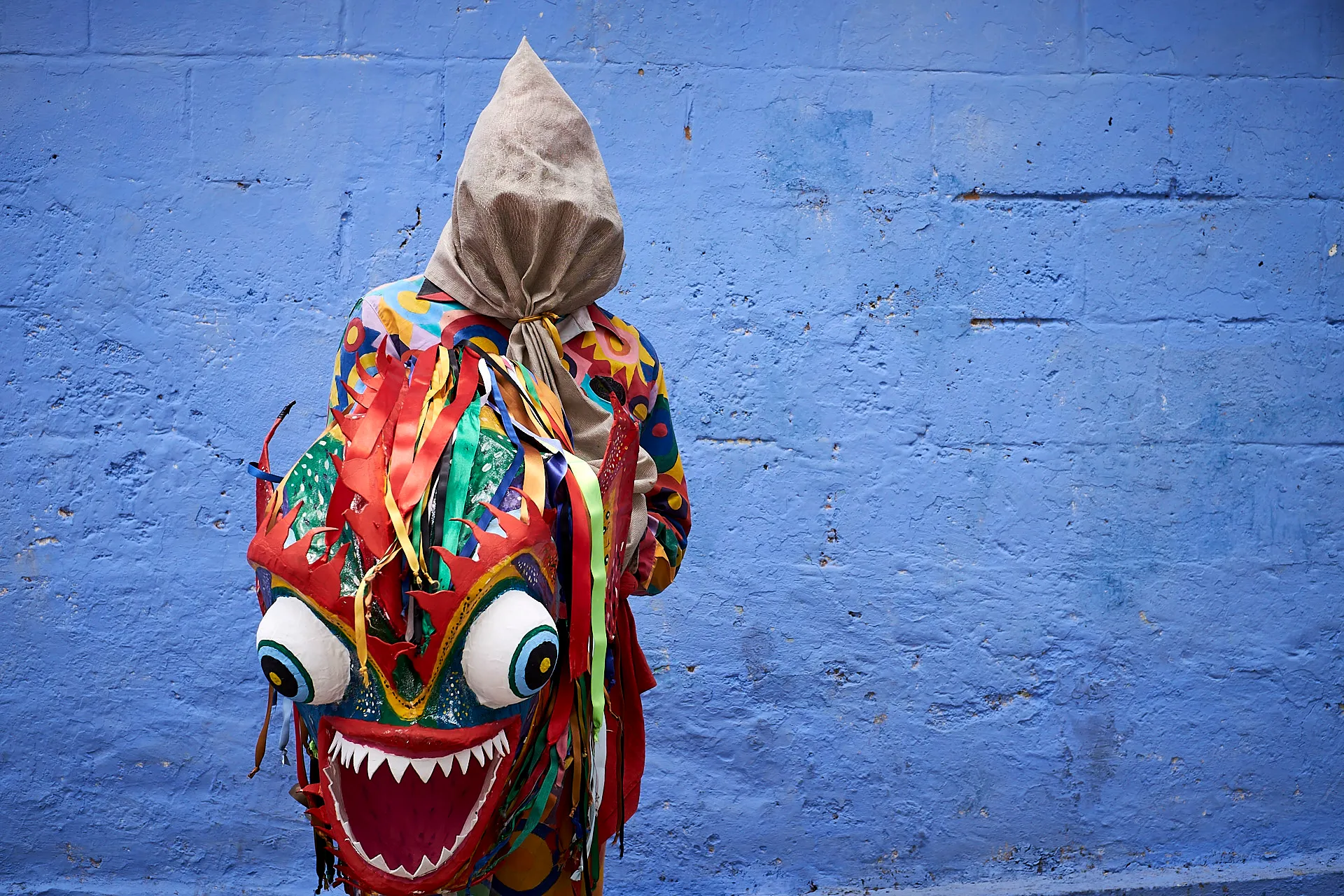


The celebration of the Dancing Devils of Naiguatá is one of the most deeply rooted cultural and religious expressions along Venezuela’s central coast. Each year, during the feast of Corpus Christi, men, women, and children gather to honor the Blessed Sacrament of the Eucharist through dance, music, and color. This festivity, which brings together religious devotion and ancestral knowledge, was declared Intangible Cultural Heritage of Humanity by UNESCO in 2012, along with other brotherhoods across the country that uphold the same tradition.
Corpus Christi, celebrated on the ninth Thursday after Holy Thursday, marks a moment of profound devotion for Catholic communities. In Naiguatá, this celebration has evolved over more than 400 years, rooted in a historical legacy that intertwines European, African, and Indigenous influences.
The dance of the devils is not merely a folkloric performance; it is a ritual of penance, promise, and spiritual revelation. The participants, known as promeseros, wear white and multicolored garments, carefully crafted masks that evoke marine and mountainous forms — a reflection of Naiguatá’s coastal landscape — and bells tied at the waist, whose rhythmic sound accompanies every step.
To the beat of the caja (a traditional drum) and maracas, the devils dance through the streets in a choreography that symbolizes the struggle between good and evil, culminating when, before the Blessed Sacrament, they lower their masks in a gesture of surrender and reverence. This act represents the spiritual triumph of good over the negative forces that inhabit the human condition.
For those who live this tradition and make it possible, the celebration is not only an act of faith, but a living mechanism of community cohesion and cultural transmission. The practice is passed down from generation to generation within family and social contexts, where historical memory finds meaning in every gesture, every dance step, and every handcrafted mask.
As a documentary photographer, returning to Naiguatá during this celebration has reaffirmed that this tradition is not static, but a living organism, full of nuances, stories, and transformations. Each year, walking through the square and the streets of this coastal town reveals new narratives and faces that sustain a practice that goes beyond festivity: it is an act of belonging, identity, and collective memory.
Here I present a fragment of the Corpus Christi dance celebrated this year in Naiguatá — a record for our memory, to continually remind us of the cultural strength of those who continue to dance, year after year, from the heart of their community.